The door will not lift
A broken spring removes much of the counterbalance. The opener may hum, stop, reverse, or lift the door only a short distance.
Serving Live Oak, Florida
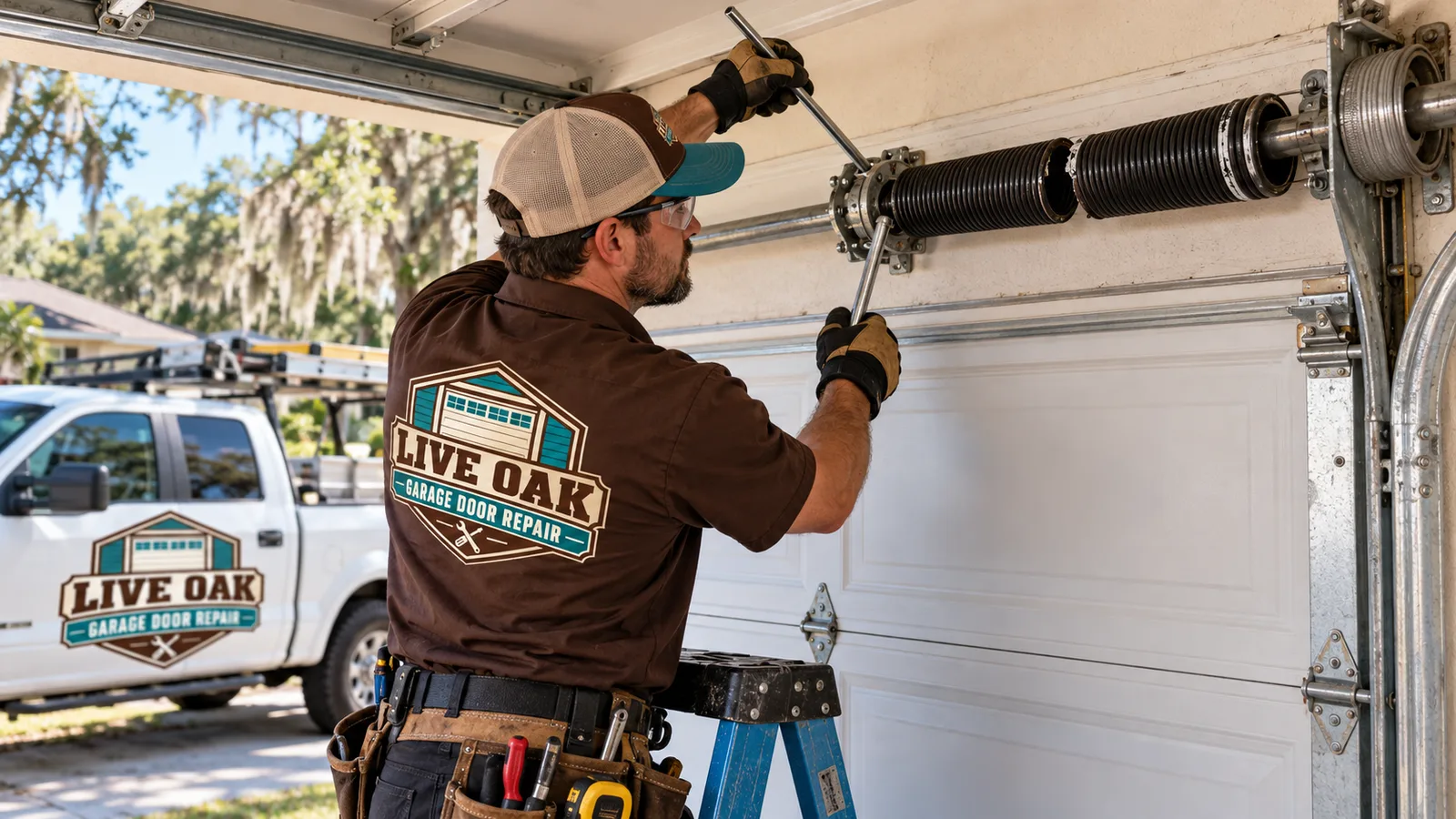
Garage door spring service in Live Oak, Florida
A broken spring can leave a heavy garage door stuck or unsafe to move. Live Oak Garage Door Repair replaces torsion and extension springs and checks the lifting system before the door returns to use.
Spring-system diagnosis
A loud bang from the garage, a door that lifts only a few inches, or a visible gap in the spring often points to a broken spring. For garage door spring replacement in Live Oak, FL, Live Oak Garage Door Repair evaluates the spring system, identifies the correct replacement, and checks the related hardware that helps the door move safely.
Garage door springs counterbalance the weight of the door. Once a spring breaks, the opener may not have enough force to lift the door, and repeated attempts can strain the opener, bend hardware, or pull the door out of alignment. Disconnecting the opener does not make the door light. Avoid standing beneath the door or trying to force it open.
Homes around Live Oak use both torsion and extension spring systems. Hot, humid Live Oak, Florida conditions can also encourage surface corrosion on unprotected steel hardware, so the inspection should include the spring coils, shaft, cables, drums, pulleys, and attachment points. If the problem extends beyond the spring assembly, garage door repair in Live Oak can address the related operating fault.
Spring types and specifications
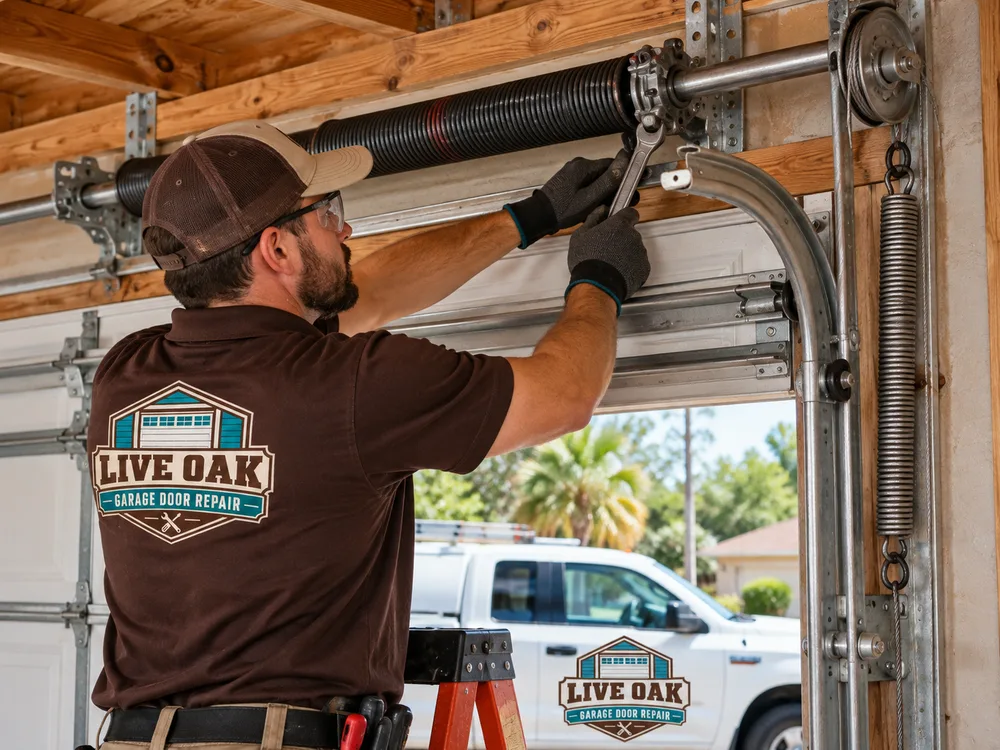
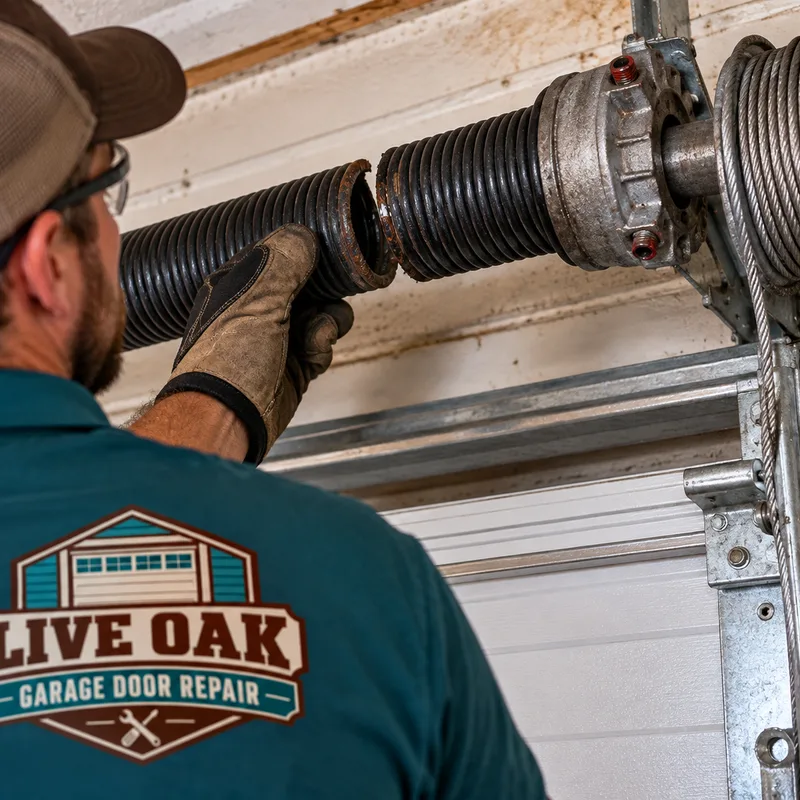
A torsion spring is mounted on a steel shaft above the garage door opening. As the door closes, the spring winds and stores energy. The shaft, cable drums, and lift cables then work together to raise the door. A broken torsion spring commonly shows a visible separation in the coil.
Extension springs run along the horizontal tracks on each side of the door. They stretch as the door closes and contract as it opens. These systems rely on pulleys, cables, and secure anchor points. Properly installed safety cables help contain an extension spring if it breaks.
The replacement must match the door's actual weight and geometry. Wire size, inside diameter, spring length, wind direction, track arrangement, and drum type can all matter. Choosing a spring because it looks similar is not a sound method. An incorrectly sized spring can leave the door heavy at the floor, cause it to rise on its own, or shorten the service life of the opener and hardware.
Warning signs
A broken spring removes much of the counterbalance. The opener may hum, stop, reverse, or lift the door only a short distance.
A visible separation in a torsion spring is a strong sign that the spring has snapped and needs replacement.
When released from the opener, a properly balanced door should not feel like its full dead weight. Do not perform this check if a spring or cable is visibly damaged.
A failed extension spring, loose cable, or cable that has left its pulley can cause one side to lag or bind in the track.
Slack cables can follow a spring failure because the spring no longer keeps normal tension on the lifting system. Avoid touching or rewinding them.
An opener is designed to move a balanced door, not compensate for a broken spring. Stop using it until the spring system is inspected.
Leave a closed door closed when possible. If it is stuck open, keep people, pets, and vehicles away because damaged lifting hardware can allow sudden movement.
Live Oak Garage Door Repair checks whether the door uses torsion or extension springs, looks for broken coils, and examines cables, drums, pulleys, bearings, brackets, and tracks.
The replacement is selected using the door's weight and the spring system's specifications. Spring size and wind direction must match the setup rather than relying on appearance alone.
The old components are unloaded with the proper tools before replacement. Torsion systems require controlled winding; extension systems require correct cable, pulley, and safety-cable routing.
After installation, spring tension is adjusted so the door can travel evenly and hold at suitable points through its range of motion.
The opener is reconnected after the door passes a manual balance and travel check. The final test covers opening, closing, cable tracking, and normal opener operation.
Stored-tension safety
Garage door springs store enough energy to move a door that may weigh hundreds of pounds. Torsion springs require correctly sized winding bars and a controlled winding procedure. Screwdrivers, socket extensions, and other improvised tools can slip from the winding cone. Extension springs can recoil if their cables or anchors are released under load.
The door itself is another hazard. With the spring broken, its weight can drop unexpectedly if a clamp, opener arm, cable, or damaged component shifts. Do not loosen a bottom bracket because the lift cable commonly attaches at that point and may still be under tension.
Safe preparation is simple: stop operating the door, keep the opening clear, and note whether the door is open or closed. If a vehicle is trapped, mention that when arranging service. Do not cut cables, loosen set screws, or attempt to stretch a replacement spring into place.
Spring and hardware details
When a two-spring torsion system has one broken spring, replacing both may be appropriate because the springs have usually completed the same operating cycles. The condition, dimensions, and compatibility of the unbroken spring still matter. A mismatched pair can produce uneven torque and poor balance.
Hardware should be judged on condition rather than replaced automatically. Frayed lift cables, worn pulleys, loose bearing plates, damaged drums, or bent brackets can interfere with a new spring. Surface rust should be distinguished from deep corrosion or damaged coils. The goal is a correctly balanced door with cables seated in their grooves and hardware secured in its intended position.
Spring life is influenced by door weight, cycle use, corrosion, and whether the spring was properly sized. Adding weight to a door, including reinforcement or decorative material, may change the required spring specification. Regular visual checks can reveal rust, frayed cable strands, or an uneven resting position before a complete failure.
A broken spring can leave a vehicle trapped inside. Keep the opening clear and do not force the door with the opener or by hand.
Common questions
It is safest to leave the door closed and stop using the opener after a spring breaks. Without proper counterbalance, the door can be extremely heavy and may fall if lifted. If the door is stuck open or a vehicle is trapped at a Live Oak property, keep the area clear and explain the situation when arranging service.
Replacing both is often reasonable when a matched torsion-spring pair has the same age, use, and specifications, but the system should be inspected before deciding. Live Oak Garage Door Repair checks the remaining spring's dimensions, condition, and compatibility because the door must be balanced by the pair.
A torsion spring sits on a shaft above the garage door opening, while extension springs run beside the horizontal tracks. Some doors use one torsion spring and others use a matched pair. The mounting location, cables, drums, and pulleys identify the system more reliably than the spring's appearance alone.
An opener should not be used to compensate for a broken spring. It is built to move a balanced door, and forcing it may damage the motor, rail, carriage, or door hardware. Stop if the opener strains, hums, or lifts the door only a few inches.
The most useful details are whether the door is open or closed, whether a vehicle is trapped, and whether you can see a broken coil or loose cable. Photos of the full door and the hardware above it may also help identify a torsion or extension setup, but do not approach hanging or tensioned parts to take them.
A new spring will correct an imbalance caused by a failed spring, but uneven travel can also involve cables, drums, pulleys, tracks, or bottom brackets. The lifting system should be checked as a unit before the door returns to operation.
A proper inspection identifies the spring type, the correct replacement specifications, and any related lifting hardware that needs attention.