Door stuck open
A door that will not close leaves the opening exposed. Stop operating it if the tracks are bent, a cable is loose, or one side hangs lower than the other.
Serving Live Oak, Florida
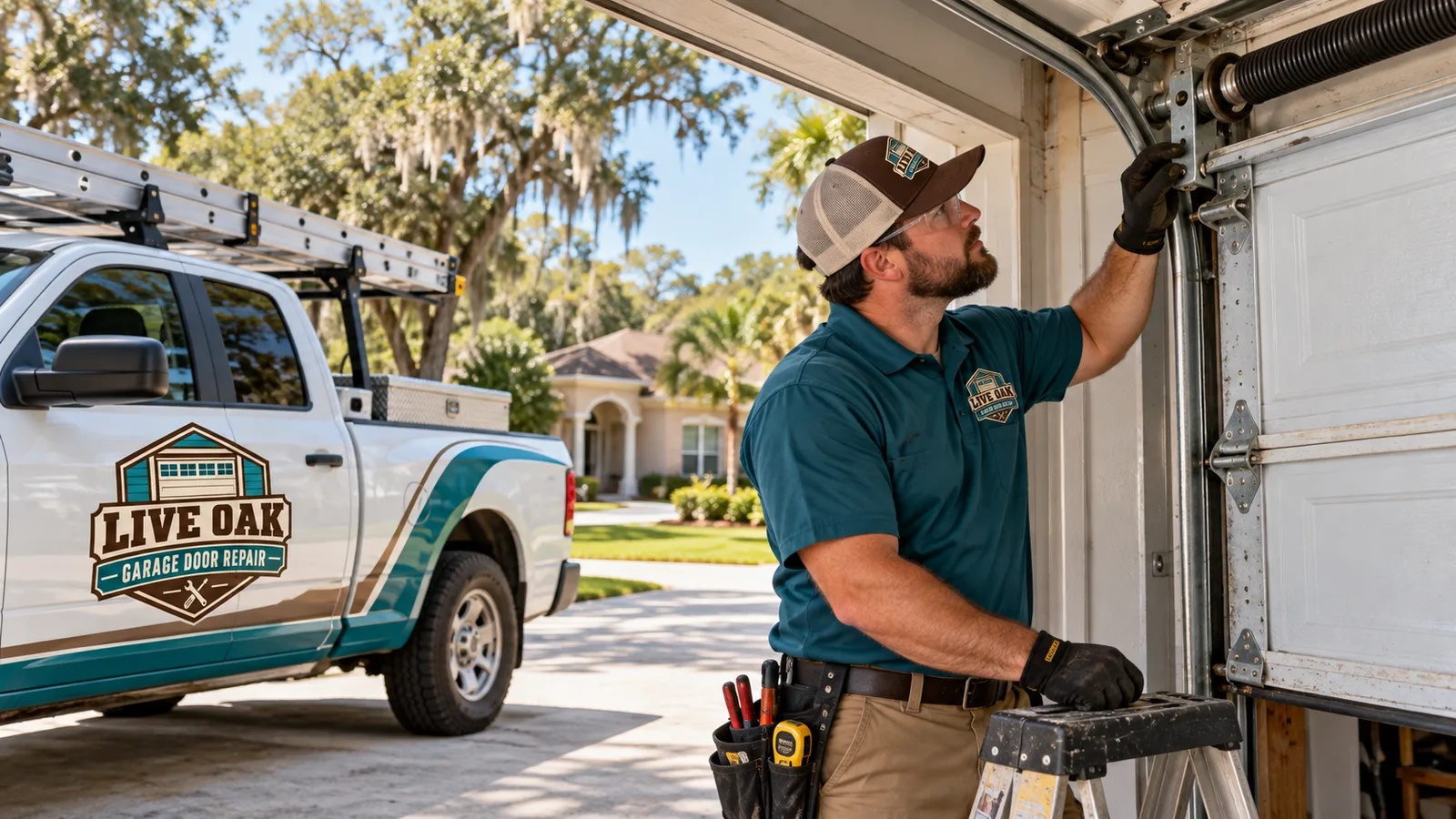
Emergency garage door service in Live Oak, Florida
When the door is stuck, crooked, jammed open, or trapping a vehicle, Live Oak Garage Door Repair can diagnose the failure and explain the safest repair.
Urgent breakdown guidance
Emergency garage door repair in Live Oak, FL starts with making the area safe and identifying what stopped the door. A hanging cable, bent track, broken spring, loose roller, or door that has come down unevenly can leave a heavy moving system in an unstable position. Keep people, pets, and vehicles away from the opening, then give us a call.
Do not keep pressing the wall control when the door is crooked or making harsh grinding sounds. Repeated operation can pull a cable farther out of place, bend track hardware, or strain the opener. Do not cut a hanging cable or loosen spring hardware. Garage door springs and lift cables remain under substantial tension even when the door is not moving.
A trapped vehicle can disrupt a commute, school run, or workday. A door stuck open creates a different concern because the garage and any connecting entry are exposed. Describe the door's position, what happened immediately before it stopped, and whether a vehicle or person is trapped. That information helps establish the urgency and the likely equipment involved.
Problems requiring attention
A door that will not close leaves the opening exposed. Stop operating it if the tracks are bent, a cable is loose, or one side hangs lower than the other.
A broken spring or failed lift system can make the door too heavy to raise safely. Avoid forcing it upward or trying to support it with improvised objects.
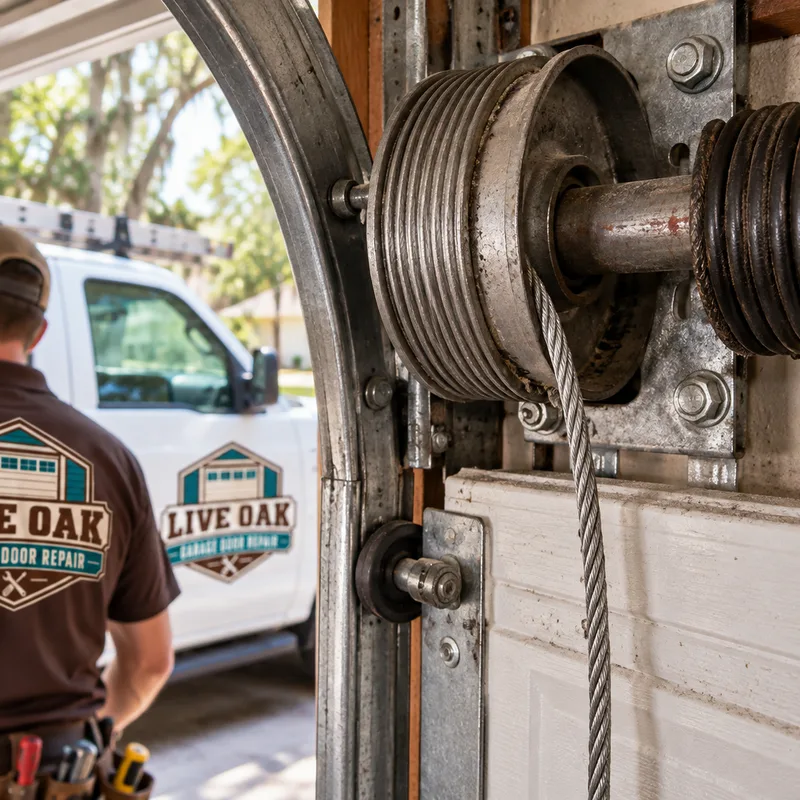
A cable may unwind after a spring, drum, bearing, or alignment problem. Do not touch it or remove the bottom bracket, which can be connected to spring tension.
A roller outside the track can leave the door unstable. Continued movement may twist the panels, damage hinges, or cause the door to drop.
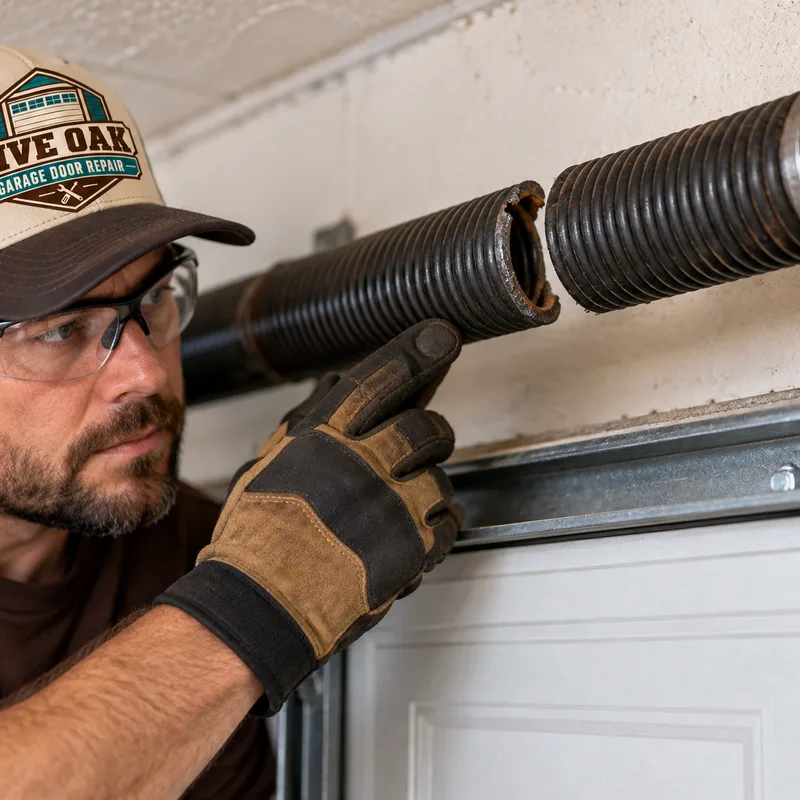
A sharp bang followed by a door that feels unusually heavy often points to a spring failure. Spring replacement requires the correct size, winding, and balance.
The cause may be a disconnected trolley, damaged gear, broken spring, or failed door hardware. The door system should be checked before the opener is run again.
Immediate safety steps
First, stop using the opener and keep clear of the door's path. If the door is partly open, do not walk beneath it. A damaged spring, cable, roller, or track may no longer hold the door evenly.
Leave the emergency-release cord alone unless the door is fully closed and stable. Pulling that cord disconnects the opener from the door. If a broken spring has removed the counterbalance, the full weight of the door can then move without the opener restraining it.
If the garage is exposed, use another entrance and secure the interior door between the garage and the living area. Move valuables only when doing so does not require passing beneath an unstable door. Take note of visible gaps in a torsion spring, loose cables near the bottom corners, rollers outside the track, impact damage, and flashing opener lights. These observations can help with initial troubleshooting, but they do not replace an on-site inspection.
Complete system diagnosis
The part that looks broken is not always the original cause. A cable can come off because the door hit an obstruction, a roller left the track, a bearing seized, or spring tension became uneven. Replacing or resetting that cable without correcting the cause can leave the door unsafe.
A proper inspection considers the door as a counterbalanced system. Torsion springs sit on a shaft above many doors, while extension springs run beside the horizontal tracks on some assemblies. Both systems offset door weight so the opener guides the door rather than lifting the full load. Correct spring selection depends on door weight and configuration, not appearance alone.
Live Oak, Florida heat, humidity, wind-driven rain, and storms can expose worn seals, corroded hardware, or electrical trouble. A power interruption may also leave an opener unresponsive even though the door hardware is intact. The inspection needs to separate electrical faults from mechanical failure before parts are replaced.
When the situation is no longer urgent, garage door repair in Live Oak can also address worn rollers, noisy movement, weather seals, opener faults, and other scheduled repairs. Emergency work stays focused on stabilizing the door, correcting the breakdown, and repairing the failed parts and testing the door.
CALL NOW: (386) 339-4441Urgent visit checklist
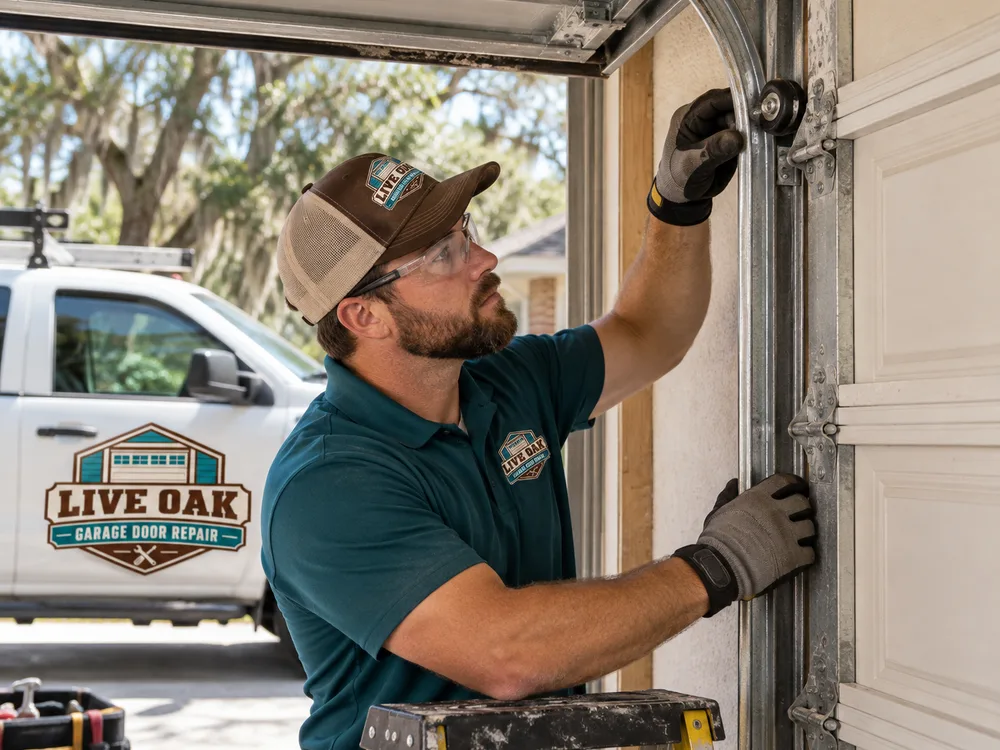
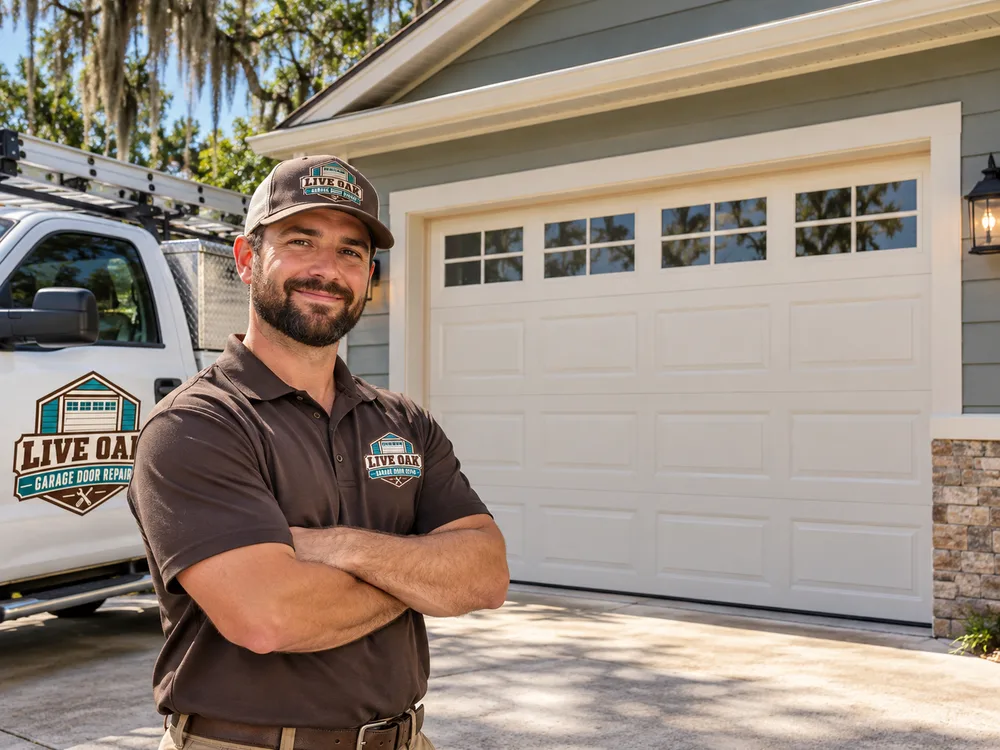
If the door is crooked, hanging open, or trapping a vehicle, stop operating it and describe its current position to Live Oak Garage Door Repair.
Common questions
Do not try to lift a garage door with a broken spring unless a qualified technician has assessed it. Without counterbalance from the spring, the door may be extremely heavy and can fall. This is especially risky with wide doors, insulated doors, and doors already sitting crooked in their tracks.
Stop using the opener, keep everyone away from the opening, and contact Live Oak Garage Door Repair with the door's position and any visible damage. Secure the interior entry to the home if it can be reached without passing under the door. Live Oak, Florida rain and storms can worsen exposure, but never force the door closed.
Yes, a hanging cable can indicate that the lift system is no longer controlling the door evenly. Do not pull the cable, loosen its drum, or remove the bottom bracket. These parts may be connected to spring tension, and disturbing them can cause sudden movement.
A loud bang followed by a heavy or immobile door often indicates a broken spring rather than an opener failure. The opener may strain, stop, or move the door only a few inches because the spring is no longer offsetting the door's weight. Stop testing it until the full system is inspected.
A door that came off its track should not be pushed, pulled, or run with the opener. The door may be unsupported on one side, and force can bend panels, damage hinges, or release a cable. It needs to be stabilized before the rollers, tracks, cables, and cause of the derailment are addressed.
Do not pull the emergency release while the door is open, crooked, or unsupported. Disconnecting the opener may allow a door with a failed spring or cable to drop. The release is safest only when the door is fully closed, stable, and there is no sign of damaged lift hardware.
Keep away from a door that is open, crooked, or trapping a vehicle. An inspection can identify the failed parts and the safest repair.