Track Alignment
The vertical and horizontal tracks are checked for bends, twists, spreading, loose brackets, and incorrect spacing. Minor distortion may be repairable; sharply creased or torn steel often calls for replacement.
Serving Live Oak, Florida
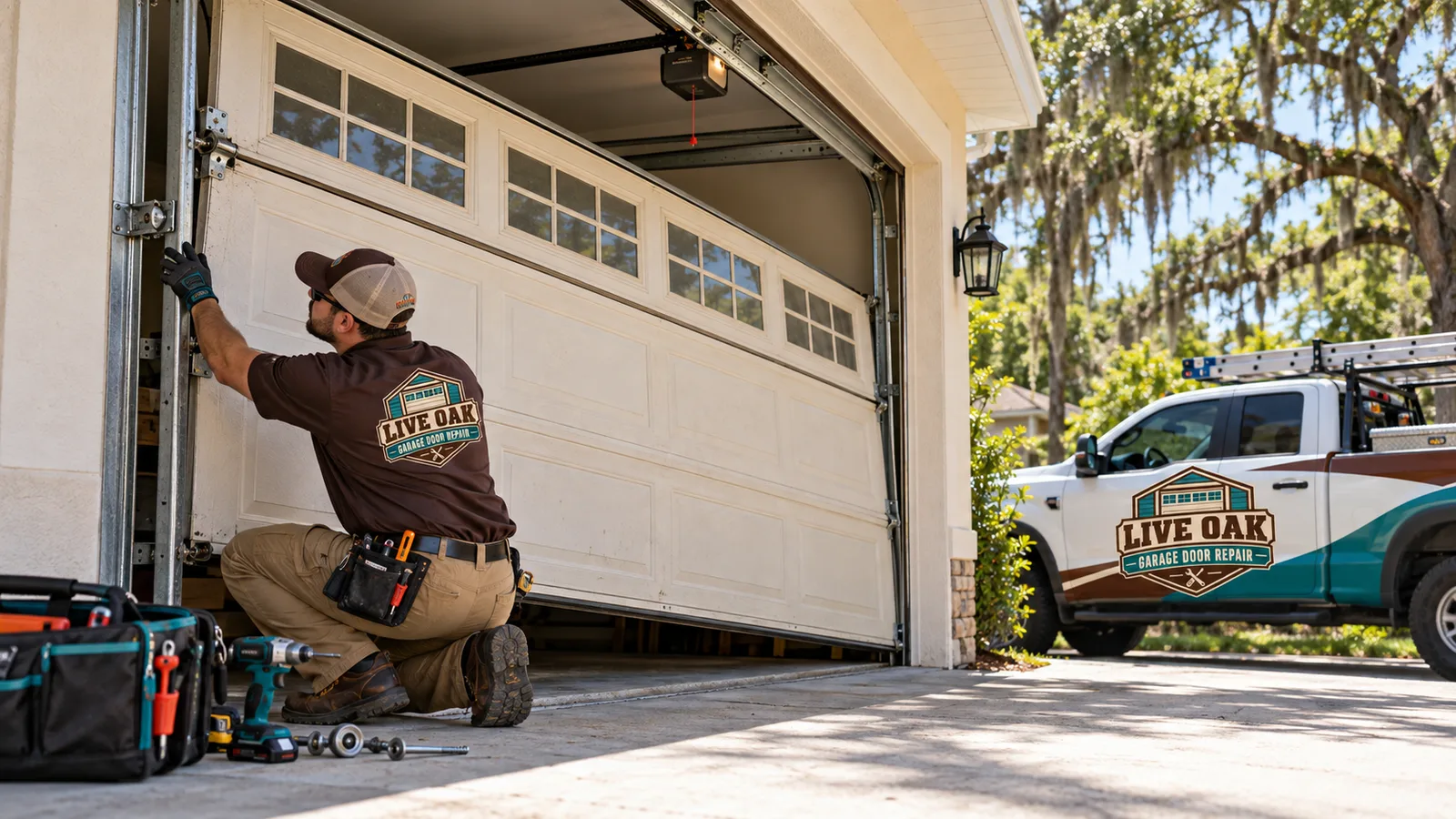
Off-track garage door service in Live Oak, Florida
A crooked, jammed, or partially hanging door needs to stay put. Live Oak Garage Door Repair inspects the tracks, rollers, cables, and brackets before putting the door back into safe alignment.
Immediate safety guidance
For garage door off track repair in Live Oak, FL, the safest first step is simple: stop operating the door. Do not press the wall control, pull the emergency release, or try to push the door into place. A door that has left its tracks may have uneven cable tension, damaged rollers, or a bent track. Another cycle can let the door bind harder, damage additional hardware, or drop unexpectedly.
Keep people, pets, and vehicles away from the opening. If the door is partly open, do not stand or walk beneath it. An off-track door can weigh hundreds of pounds, and the spring and cable system may still be carrying substantial tension even when the opener is disconnected.
Live Oak Garage Door Repair evaluates why the door came out before attempting to reset it. The immediate problem may be a roller outside the track, but the cause can be a loose bracket, an obstruction, a damaged cable, impact to the track, or a door that became skewed as it moved. Correcting the cause matters because simply forcing the roller back into place may leave the door ready to derail again.
Track and roller failures
Garage doors depend on both sides moving at nearly the same rate. When one side stops, rises faster, or loses cable tension, the door can rack diagonally in the opening. Rollers may then climb the track lip or pull completely free.
Vehicle impact is one clear cause. Even a modest bump can bend a vertical track or shift its mounting brackets. Debris in the track, seized roller bearings, loose hinges, and worn roller stems can also interrupt normal travel. A lift cable that slips, frays, or comes off its drum can leave one side unsupported. If the door is forced against an object near the floor, the opener may keep applying pressure while the lower rollers remain trapped.
Live Oak, Florida's humid, rainy conditions can contribute to corrosion on exposed steel hardware, especially around the lower track area where moisture and wind-driven rain may collect. That does not automatically mean the track needs replacement, but rust, pitting, and loose fasteners should be examined during garage door track repair in Live Oak, FL.
If the door has a separate opener fault but remains properly seated in both tracks, garage door repair may involve a different diagnosis. An off-track door should be stabilized and mechanically inspected before opener operation is tested.
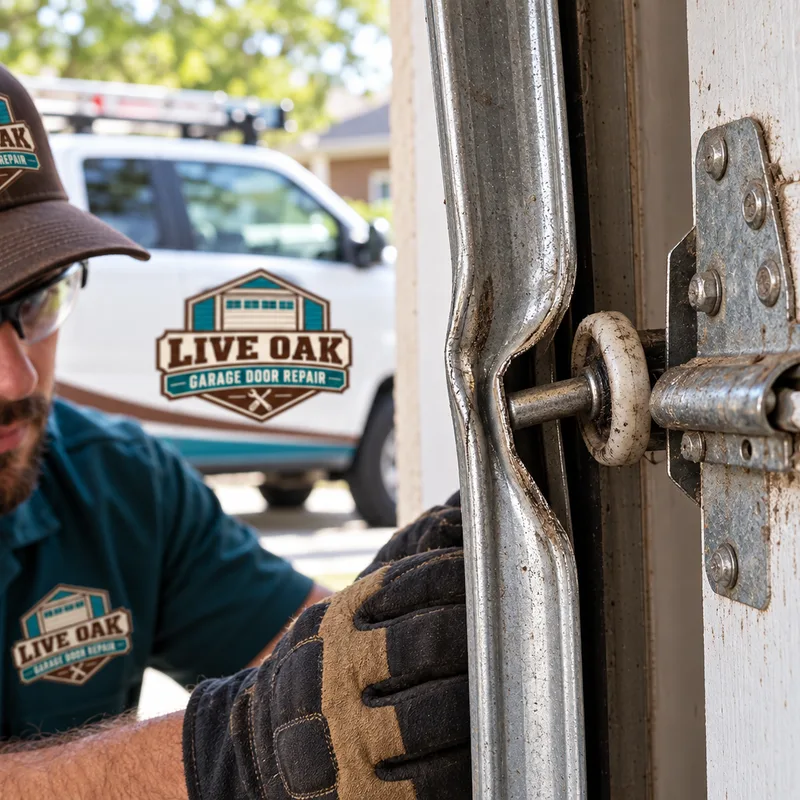
Tracks, rollers, cables, and controls
The vertical and horizontal tracks are checked for bends, twists, spreading, loose brackets, and incorrect spacing. Minor distortion may be repairable; sharply creased or torn steel often calls for replacement.
Each accessible roller is checked for a bent stem, cracked wheel, flat spot, excessive play, or seized bearing. Hinges are examined for cracks and enlarged mounting holes that let the roller shift.
Both cables should seat correctly in their drum grooves and carry balanced tension. Frayed cable, crossed wraps, a slipped cable, or an uneven drum position requires correction before normal operation resumes.
Loose jamb brackets can let a track move under load. Fasteners, flag brackets, track joints, and supporting angle are checked for movement, damage, and secure attachment.
A bent lower corner or damaged panel can change how the rollers enter the track. The inspection looks for buckling, split attachment points, and deformation that could make a reset temporary.
After the door moves correctly by hand, opener travel and force can be assessed. Photo-eye alignment and reversal behavior are checked before the system returns to regular use.
Inspection to completion
Live Oak Garage Door Repair begins by assessing the door's position and controlling movement. A hanging or crooked door must be supported before hardware is loosened. The opener is kept out of operation while the mechanical problem is addressed.
The inspection follows the track path, rollers, hinges, cables, drums, and mounting hardware. This distinguishes a displaced roller from a larger alignment or lifting-system problem.
Repair may involve straightening a serviceable track, resetting brackets, replacing damaged rollers, or correcting cable placement. Parts with severe bends, cracks, worn bearings, or compromised attachment points are identified for replacement.
The rollers are returned to the track under controlled conditions. Track spacing and alignment are adjusted so the door can travel without pinching, scraping, or excessive side-to-side movement.
The door is moved through its range by hand before powered operation is considered. Balance, cable tracking, roller movement, opener travel, and safety reversal are checked as applicable.
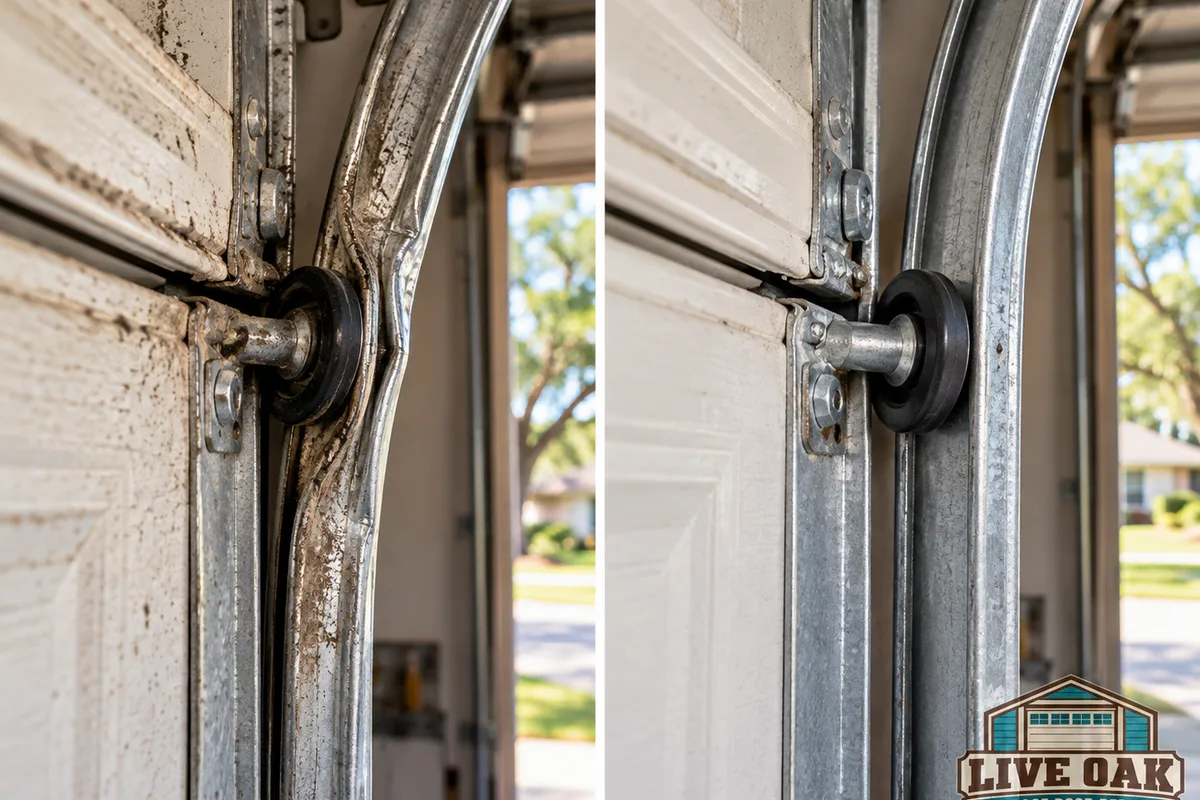
Track repair details
A small bend in an otherwise sound track may be straightened if the steel has not split, sharply creased, or pulled away at a mounting point. The repaired track must retain the correct profile and allow the roller to pass without binding. Alignment also has to match the opposite side so the door remains square through its travel.
Replacement is usually the better choice when a track is torn, heavily kinked, crushed, deeply corroded, or distorted across a long area. A track that has been repeatedly forced back into shape may no longer hold its geometry under load. Damaged brackets and supporting angle also need attention; installing a sound track on unstable supports does not correct the problem.
Track work cannot compensate for a bent door panel, failing hinge, or unequal cable tension. Those conditions can continue pushing the rollers sideways. Live Oak Garage Door Repair considers the full moving system before recommending a reset, straightening, or replacement.
Homes outside the denser part of Live Oak may have detached garages, workshops, or longer drive approaches. Clear access to both sides of the opening helps the inspection and gives room to support a crooked door safely.
A door that is crooked, jammed, or missing a roller from the track can worsen with another cycle. Arrange an inspection so the door can be stabilized and the damaged parts identified before more hardware is affected.
Common questions
Do not attempt it while the door is crooked, hanging, or under uneven cable tension. The roller may look easy to guide back, but loosening the track or pulling the emergency release can allow the door to shift suddenly. Keep the Live Oak garage opening clear and have the tracks, cables, and brackets inspected before the door is moved.
It should remain stationary until its position and support are assessed. Operating the opener or lifting one side by hand can twist the door further, pull out more rollers, or damage the top track and panels. If a vehicle is trapped, keep the door still until its position and supports have been inspected.
No, a minor bend may be repairable when the track is structurally sound and can be restored to the correct profile. Replacement is more likely when the steel is sharply kinked, torn, crushed, badly corroded, or damaged at a bracket connection. The roller must move through the corrected area without binding before the repair is considered complete.
A lift cable can lose tension when one side of the door rises or drops farther than the other. It may then unwind from the drum, cross a groove, or hang beside the track. The cable should not simply be placed back on the drum without checking the drum position, cable condition, spring tension, and the cause of the uneven movement.
New rollers help only when worn, seized, cracked, or bent rollers caused or contributed to the derailment. They will not correct bent tracks, loose brackets, damaged panels, or unequal cable tension. A proper repair identifies each contributing condition before replacement rollers are installed.
Not automatically. The opener may have strained while the door was binding, but its condition should be evaluated only after the door is mechanically aligned and moves properly by hand. Travel limits, force settings, attachment points, photo eyes, and reversal performance can then be checked without using the opener to overcome a track problem.
Keep the door still if it is crooked, partly open, hanging by a roller, or showing a loose cable. An inspection can identify the cause and the needed repair.