Motor Runs but the Door Does Not Move
A disconnected trolley, stripped internal gear, damaged belt or chain, or a door that is mechanically stuck can create this symptom. The manual operation test helps separate an opener fault from a door problem.
Serving Live Oak, Florida
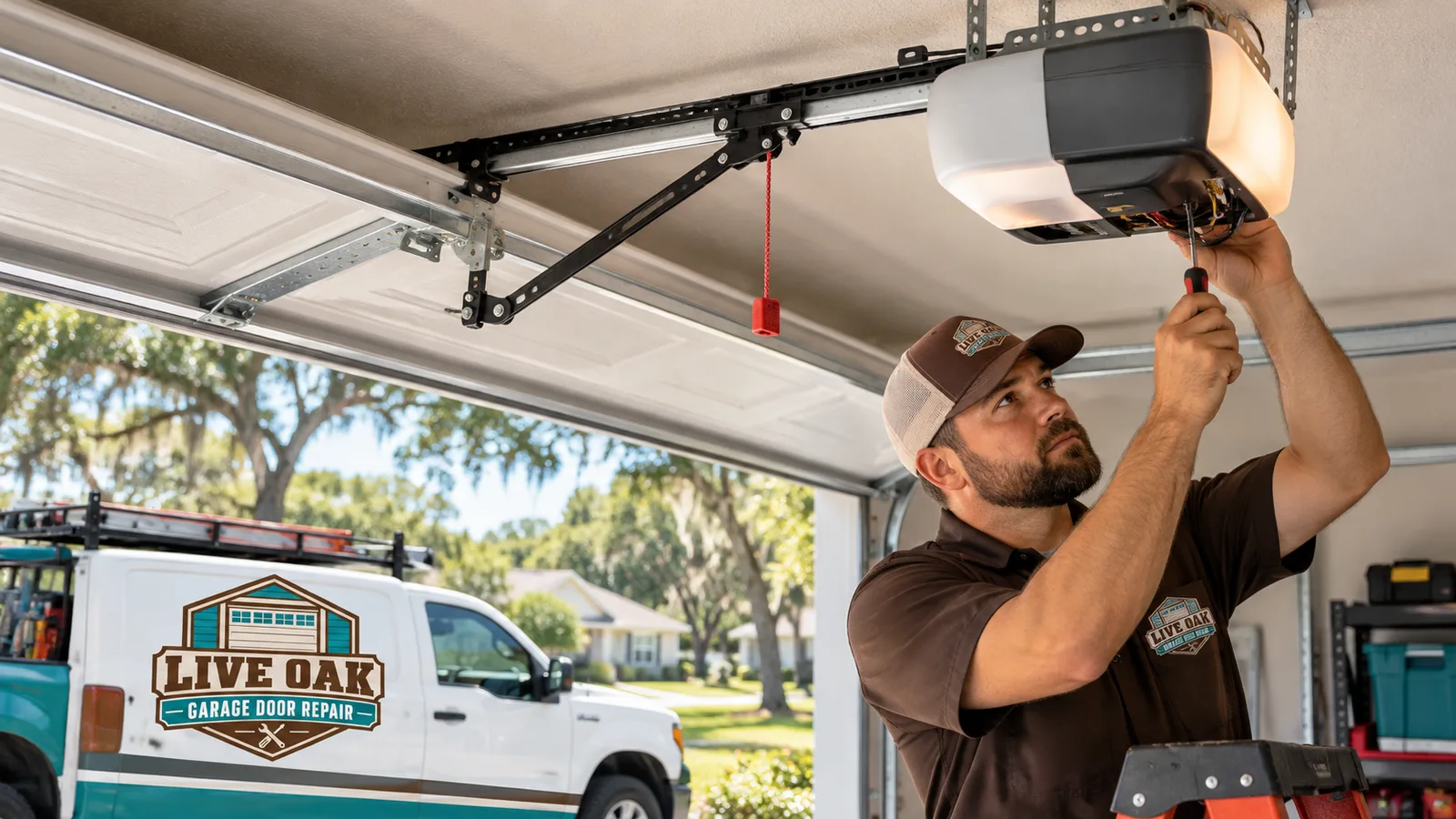
Garage door opener service in Live Oak, Florida
We check an opener that hums, reverses, stops mid-cycle, or ignores the remote, then repair the failed part or replace the opener when needed.
Complete opener service
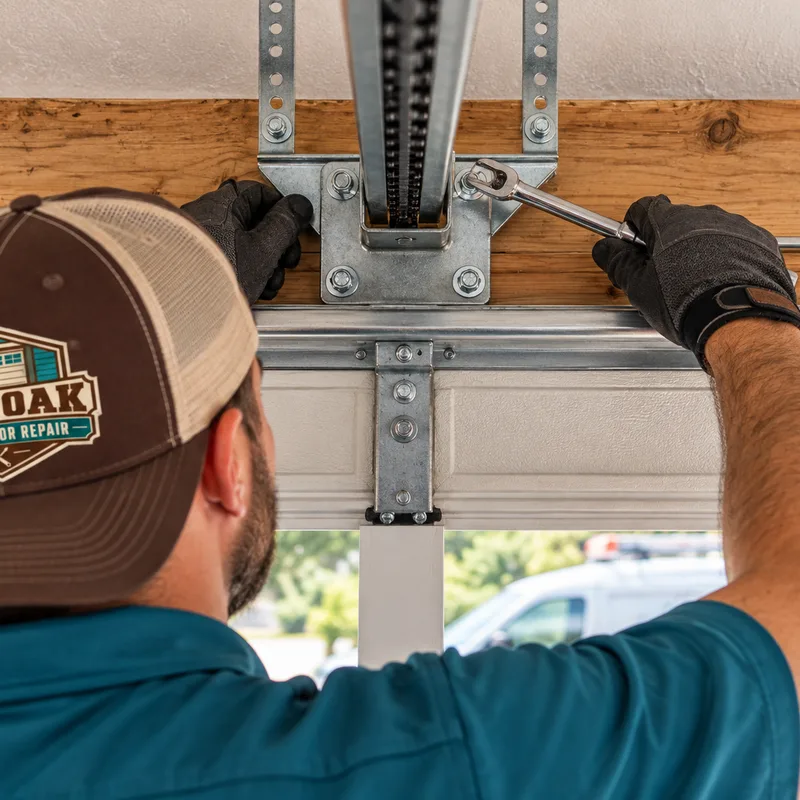
Live Oak Garage Door Repair handles garage door opener installation in Live Oak, FL for homeowners who need a new operator, are replacing a failed unit, or want controls that better fit daily use. The work involves more than hanging a motor. The opener must suit the door's size and weight, the rail must be aligned, the travel limits and force settings must be adjusted, and the photo-eye safety sensors must be positioned and tested.
Repair begins with the same whole-system approach. A humming motor can point to a failed capacitor, stripped drive gear, jammed trolley, or a door that is too difficult for the opener to move. Unexpected reversal may come from blocked or misaligned safety sensors, incorrect travel limits, excessive closing resistance, or a binding door. Checking the cause before replacing parts avoids changing a component that did not create the problem.
Warm, humid Live Oak, Florida conditions can contribute to corrosion at terminals and hardware, while thunderstorms and power interruptions can damage an opener's control board or erase programmed settings. Enclosed garages also become hot, which makes deteriorated capacitors and electronics worth checking when an opener becomes unreliable. These conditions do not prove that a specific part has failed, but they provide useful context during inspection.
Whole-system diagnosis
An opener should be tested with the garage door disconnected at the emergency release. When a properly balanced door is operated by hand, it should move without severe binding and should not feel excessively heavy. If it drops, rises on its own, or jams in the tracks, the door system needs attention before the opener is asked to move it again. Opener horsepower is not a substitute for correct door balance.
Live Oak Garage Door Repair checks the power supply, wall control, remote response, trolley engagement, drive system, travel limits, force settings, safety sensors, wiring, and visible condition of the logic board. Chain-drive units may need adjustment when the chain sags or chatters. Belt-drive systems require inspection for worn teeth, splitting, or a damaged trolley connection. Screw-drive operators can develop rail and carriage wear that produces noisy or uneven travel.
If the fault lies in the door rather than the operator, garage door repair can address the mechanical condition before the opener is returned to service. Continuing to run an opener against a binding or badly balanced door can strain the motor, gears, rail, and attachment points.
Common symptoms
A disconnected trolley, stripped internal gear, damaged belt or chain, or a door that is mechanically stuck can create this symptom. The manual operation test helps separate an opener fault from a door problem.
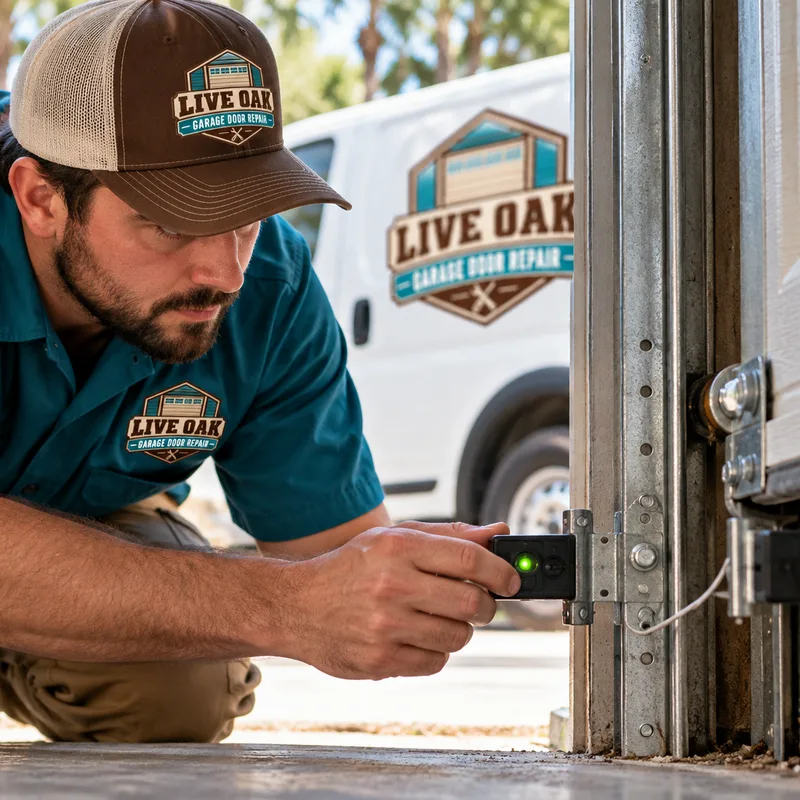
The cause may be an obstruction, sensor alignment, loose sensor wiring, incorrect down-travel adjustment, or resistance in the tracks and rollers. Safety devices should be tested rather than bypassed.
Testing covers batteries, lock mode, programming, radio interference, keypad condition, and receiver response. A working wall control with failed wireless controls narrows the likely causes.
Rattling, grinding, and uneven movement can come from loose mounting hardware, drive wear, rail alignment, or a struggling door. Each source calls for a different correction.
Diagnostic light patterns can point toward sensor, travel, wiring, or control-board faults. The exact meaning depends on the manufacturer and model.
After an outage, the opener may need its limits or controls reprogrammed. If power is present but the unit remains unresponsive, the outlet, wiring, capacitor, and control board may need testing.
Repair or replacement
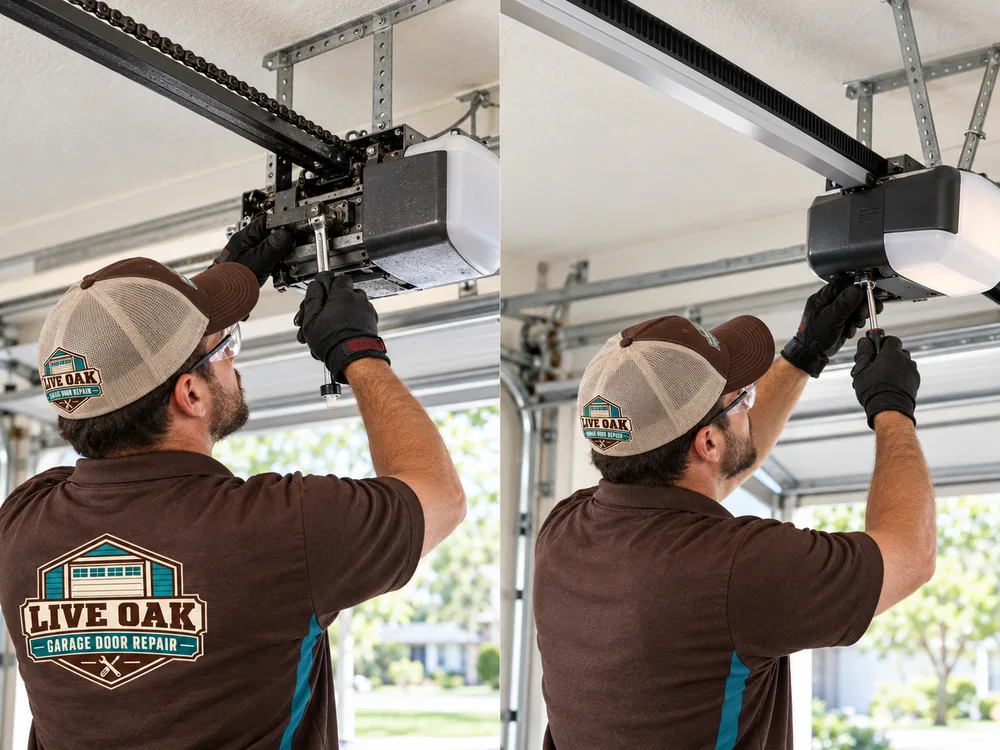
Replacement makes sense when a motor or control board has failed on an older unit, needed parts are unavailable, or the rail or drive has extensive wear. Compatibility comes first. Door height determines rail length, while door weight, construction, balance, and operating condition influence the operator choice.
Chain-drive openers use a metal chain and are often chosen for straightforward, durable operation, though they tend to transmit more vibration. Belt-drive models usually run more quietly, which may matter when living space is close to the garage. Wall-mount operators attach beside the torsion shaft and preserve overhead space, but they require a compatible door and spring arrangement. Smart controls, battery backup, keypads, and additional remotes can be considered after the basic fit is established.
A new opener must include properly installed entrapment protection. Photo-eye sensors are mounted near the bottom of the opening and stop or reverse closing travel when their beam is interrupted. The door's reversal response also needs testing after the limits and force are set. Live Oak Garage Door Repair can compare repair and replacement based on the existing unit's condition and the way the garage is used.
Installation details
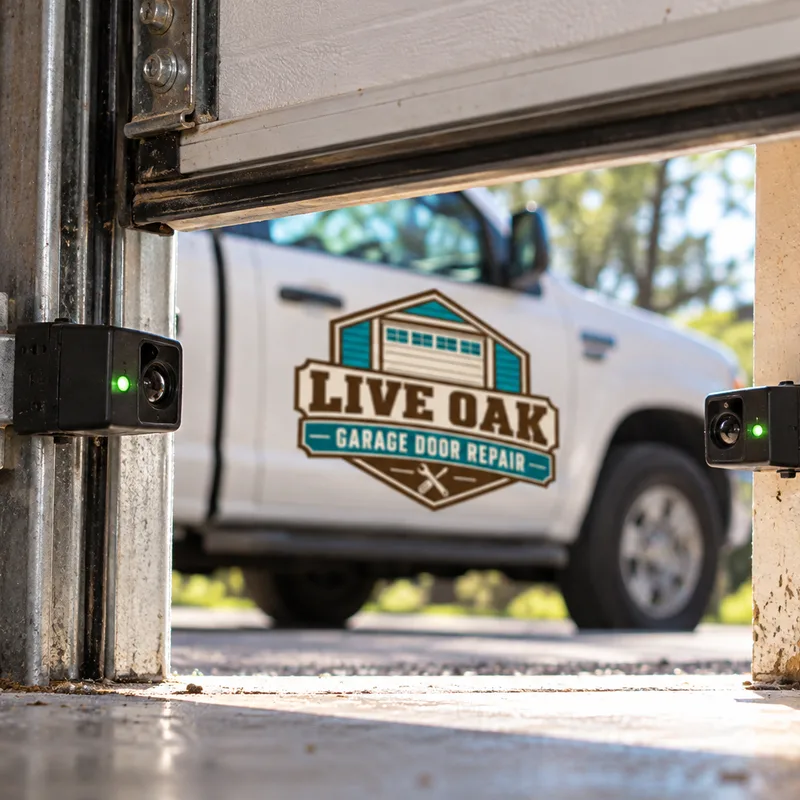
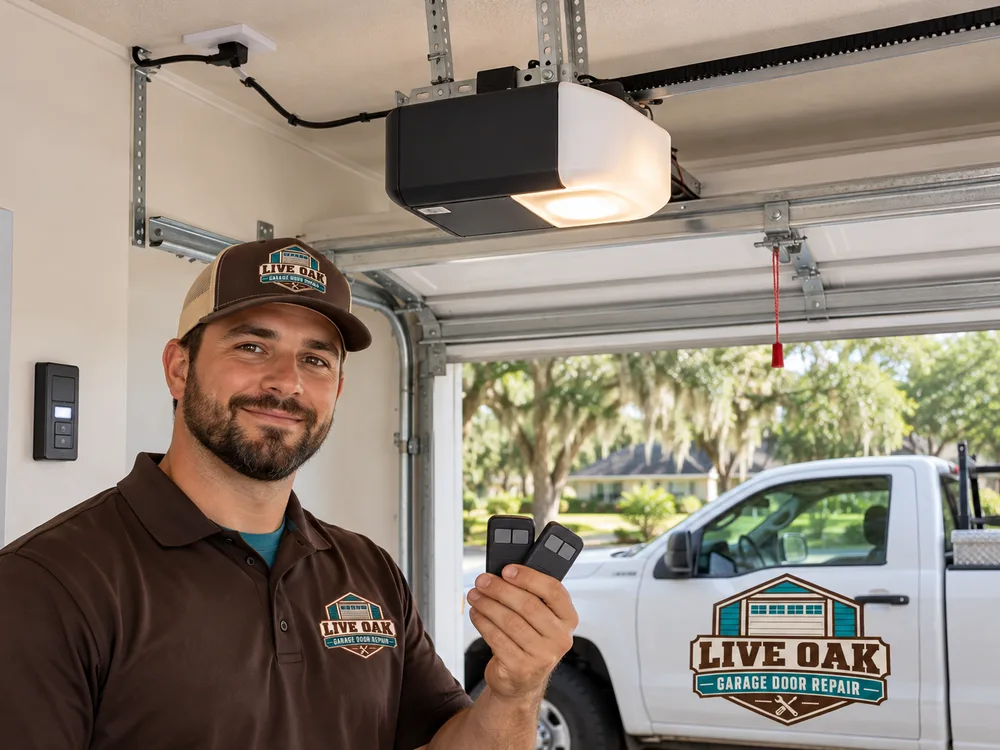
When an opener becomes unreliable, early diagnosis can prevent repeated strain on the motor and door hardware. Describe the symptom and arrange an inspection of the complete operating system.
Common questions
Repair is usually reasonable when the opener is compatible with the door, parts are available, and the fault is limited to a serviceable component or adjustment. Replacement may be the better choice when the motor, logic board, rail, or drive has extensive wear, or when repeated failures make further repair poor value. Live Oak Garage Door Repair can test the existing unit and compare both options after identifying the fault.
A humming opener may have a failed capacitor, stripped gear, jammed trolley, damaged drive component, or a door that is stuck or too heavy for the motor to move. Stop repeated attempts and avoid pulling the emergency release while standing beneath a raised door. The door should be tested manually to determine whether the operator or the door mechanism caused the failure.
Premature reversal usually points to blocked or misaligned photo eyes, incorrect down-travel settings, excessive closing resistance, loose wiring, or a mechanical obstruction. Sunlight can also interfere with some sensor setups when it shines directly into a receiver. The safety system should be cleaned, aligned, and tested rather than bypassed.
Existing remotes can be reused only when their radio system and frequency are compatible with the replacement opener. Compatibility varies by brand, model, and production generation. During garage door opener installation in Live Oak, FL, controls should be checked before equipment is selected to identify any new remotes or keypad that will be needed.
A stronger opener should not be used to compensate for a poorly balanced or binding garage door. The springs counterbalance the door's weight, while the opener controls movement. If the door is unusually heavy by hand, drops when released, or sticks in its tracks, its mechanical condition needs correction before a new operator is installed.
Yes, power surges and outages associated with Live Oak, Florida thunderstorms can affect control boards, programming, outlets, and connected accessories. If the opener fails after a storm, first confirm that the outlet has power and that the circuit breaker and any GFCI protection have not tripped. Internal electrical testing should be left to a qualified service professional.
An inspection of the wall control, remote, keypad, sensors, motor, and door movement can identify the opener fault and whether repair or replacement is appropriate.